The End of the Garden Is Still the Office: A Real Network Link for Your Shed
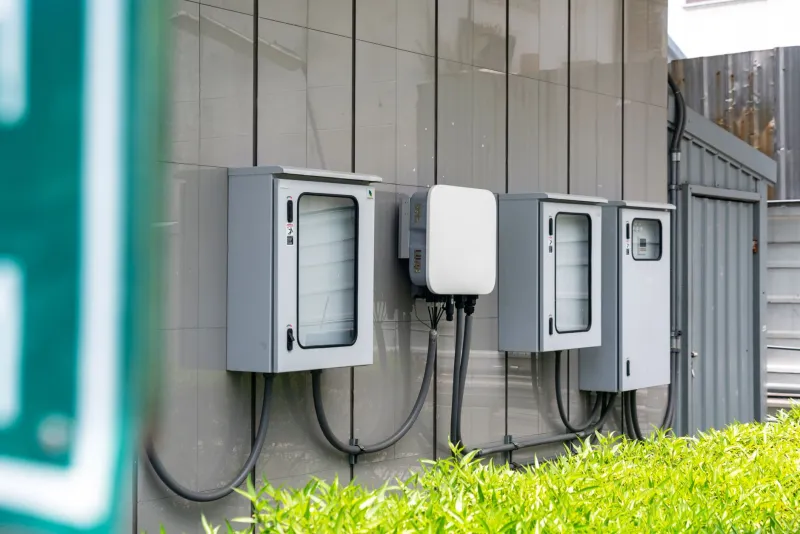
A garden office used to be a nice-to-have: a desk, a kettle, maybe a fan heater and a willingness to walk back to the house when the signal dropped. In 2026, it is often a full working location. Video calls, cloud storage, VoIP, a PoE camera on the door and maybe a smart lock all expect a stable connection. A Wi-Fi extender perched in the kitchen and aimed at the patio is not a plan. It is a hope with an LED on it.
The useful mindset is this: treat the outbuilding as a small branch office. It needs a real link back to the house, its own local network bits, and a route that can be maintained. That starts long before anyone picks up a spade.
Start with a link budget, not a shopping list
Before choosing cable or fibre, write down what the garden office will actually do. One person on Teams and Spotify is a different job from two desks, a NAS backup, a PoE access point and a 4K camera. Add a little headroom, but do not gold-plate the link just because the word 'future-proof' looks good on a quote.
For most UK gardens, the practical question is simple: is the run short and electrically calm enough for copper, or does it deserve fibre? A point-to-point Cat6 run can work well over a modest distance, but it is still a copper cable connecting two buildings with different power feeds and different exposure to surges. Fibre avoids that electrical path entirely and handles longer distances with less drama. It does not carry power, though, so you will need local mains power at the shed for a media converter or a switch with an SFP port.
If the outbuilding needs PoE for cameras or an access point, you can either use copper and accept the surge-protection work, or run fibre and put a small PoE switch in the shed. Neither is wrong. What is wrong is burying a long copper cable and hoping the surge fairy stays away.
Trench, duct and drainage: the boring bits that decide everything
A direct-buried cable looks tidy for about a week. A duct looks tidy for decades. Use a proper twin-wall duct, ideally 50mm or larger, with a draw rope already inside. Keep bends sweeping rather than sharp, and plan a draw pit or accessible joint at each end. If the route changes direction more than once or twice, add another access point. You will thank yourself the first time a cable is damaged or a technology changes.
Depth matters, but so does the route. Keep the duct away from tree roots, proposed patios, drainage runs and anywhere a future shed, fence post or trampoline might land. Give it a slight fall so condensation and water can drain away from the buildings, and seal the ends against mice, damp and curious insects. In clay-heavy or wet ground, assume water will find the duct. Design for it rather than pretending it will stay dry.
Photograph the trench with a tape measure in shot before backfilling. Label both ends of the duct. Draw the route on a simple plan and keep it with the network records. The next person to dig may be you, and memory is not a documentation system.
Fibre or copper? Choose by risk and distance
Copper is familiar and easy to terminate, but it is also an electrical conductor between buildings. That makes it vulnerable to differences in earth potential and nearby lightning activity. If you use copper, fit suitable Ethernet surge protection at both ends and make sure the electrical arrangements are proper, not improvised. Surge protectors are not a substitute for correct bonding and earthing; they are part of a wider job.
Fibre is the calmer choice for longer runs and for buildings with separate power. Pre-terminated fibre in a duct, with a modest media converter at each end, is often the least fussy solution. For a small office, OS2 single-mode or OM3 multimode will both do sensible jobs; the important part is matching the optics at each end and leaving enough slack for a re-termination.
Do not run data cable alongside the mains feed for the shed just because it is convenient. Power and data should travel as neighbours, not bedfellows. Use separate ducts and separate routes where possible. If they must cross, cross at right angles. The mains feed itself should be designed by a qualified electrician, with the right armoured cable, protective device and local isolation. A garden office is still a building with electrical demands, not an extension lead with a roof.
Test the link before you bury the evidence
Once the cable or fibre is in the duct but before the trench is backfilled, test it properly. For copper, use a cable certifier or at least a good link tester that confirms wire map, length and faults. For fibre, check loss and continuity with the correct test gear for the fibre type. Then run a real traffic test: a laptop at each end, a file copy or iperf, a video call, and a check that any PoE device powers up as expected.
If the test fails, you still have an open trench and an accessible duct. That is a much better day than discovering the problem after the patio has gone down. Leave a spare draw rope, label the cables, and record what was installed, where it runs and which port connects to what.
A garden office does not need enterprise-grade drama. It needs a sensible route, the right cable or fibre for the distance and risk, separation from power, surge protection where copper is used, and a test result before the evidence is buried. Do that, and the shed stops being a signal gamble and starts being a place where work actually happens.