Patch Panels and Paperwork: Checking a Leased Office's Cabling Before You Sign
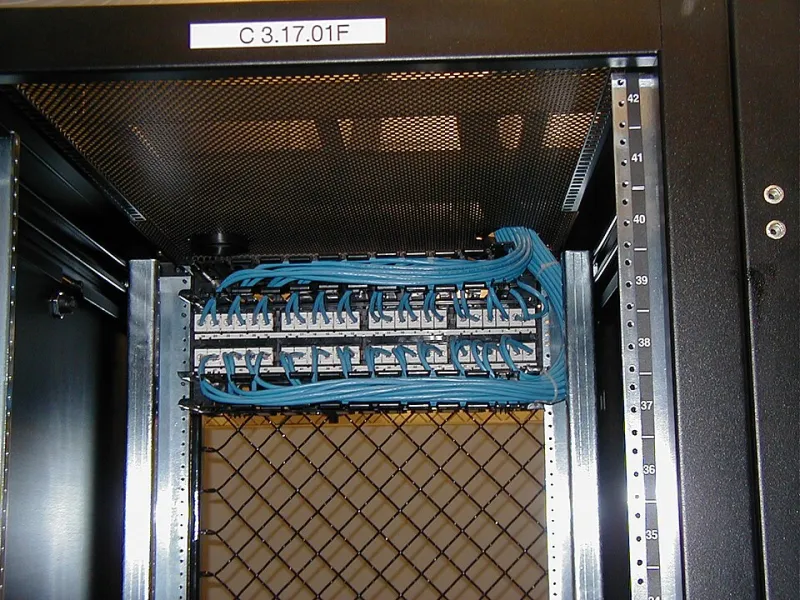
Photo: Robert.Harker, CC BY-SA 3.0, via Wikimedia Commons
Most lease negotiations are about money: rent, service charge, break clauses, and who pays to fix the air conditioning. The cabling in a cupboard behind reception tends to get about thirty seconds of attention, usually a vague question about whether the building "has fibre". Then the first week arrives, the card machine drops offline, and the "fibre-enabled" building turns out to have one 80 Mbps line shared with three other tenants.
A pre-lease cabling audit is not glamorous. It is, however, one of the cheaper pieces of due diligence a small business can do, and it can be done in a single visit with a torch, a phone camera and a modest cable tester.
The telecoms clause is where the surprises live
Start with the paperwork. Most leases have a clause covering communications apparatus; read it before you read the break clause. The useful questions are simple. Does the tenant need landlord consent to install cabling, and if so, who gives it and how long do they take? Does the lease include the comms cupboard and riser within the demised premises, or does the landlord keep control of them? If the landlord keeps them, you are a guest in your own network.
Look for reinstatement wording too. If you install a cabinet, a patch panel or a run of Cat6, will the lease require you to take it out at the end of the term? That is a cost you do not want to discover five years later.
Find the cupboard before you admire the meeting room
Where the kit physically lives matters more than most tenants expect. In a small suite it might be a wall-mounted cabinet in a storeroom; in a multi-let building it might be a shared comms room in the basement, or a cupboard under the stairs that everyone has forgotten. Photograph the front and the back, the patch panel labels, the switch make and model, the power arrangement, the cable entry point and the general state of the thing.
Check the practical bits: is the cupboard on your electricity meter or the landlord's? Is there any ventilation? A sealed cupboard with a switch, a router and a UPS will run hot in July, and heat is a slow, quiet killer of uptime. Is it locked, and who holds the key? If the answer is "the managing agent, during office hours", that is a problem worth solving before you sign.
Also look at the cable routes. Cables stapled along skirting, run next to mains, or disappearing into a wall with no obvious destination are all worth noting.
Labels are a claim, not a fact
Ask for a cabling schedule and expect it to be out of date, incomplete, or written in the previous tenant's shorthand. Then test a sample of outlets yourself, or pay someone to do it. A basic tester will find dead pairs and miswired ports; a proper certifier will tell you whether the cable is Cat5e, Cat6 or something described as Cat5e that is actually copper-clad aluminium. The last of those will work, briefly, until it doesn't.
Watch for daisy-chained outlets — two ports fed by one cable through a hidden switch — and for the classic "we needed one more desk" trailing lead through a wall. Neither is fatal, but both change the cost of making the network reliable.
Fibre available is not the same as fibre installed
Every broadband checker will tell you what is available at the postcode. What it will not tell you is what is actually terminated in the building, how it reaches your floor, and who has to sign for it. Ask the landlord or managing agent what the building currently uses. Ask the other tenants if you can.
If the fibre has to cross common parts — a shared riser, a landlord-owned duct, a wall in the communal corridor — someone has to grant a wayleave. Find out whether one already exists for the building, and who signs a new one. A missing wayleave can add weeks to a move-in date.
Put the network in the negotiation
Re-cabling a small office is not a trivial cost. Twenty outlets, a cabinet, a switch and labour can land anywhere between roughly £2,000 and £4,000 depending on the building and the state of the walls. That is a fit-out cost the rent does not mention, and it is fair to raise it before signature rather than after.
Useful asks include a schedule of condition for the comms cupboard, a landlord contribution to infrastructure, a rent-free period that covers the cabling work, or an agreed infrastructure inventory annexed to the lease. It also helps to agree in writing who maintains what: the landlord's riser, your cabinet, the shared switch in a multi-let building.
A short pre-signature checklist
- Telecoms clause, consent process, named signatory and expected turnaround.
- Whether the comms cupboard and riser sit inside your demise.
- Power supply, cooling, locks and keys.
- Photographs and a written inventory of cabinets, panels, switches and outlets.
- Sample test results, cable category, and any CCA cable.
- Openreach and altnet availability, building wayleave status, install lead times.
- Reinstatement obligations and fit-out budget, agreed before completion.
The hour that saves a fortnight
A lease is a long document about walls and money. The network is what actually runs the business. An hour with a torch and a tester during the viewing period costs very little, and it turns a vague promise about "fibre in the building" into a list of things you can either fix, budget for, or walk away from.