Stop Charging the Front Door: A Wired Video Entry Plan That Actually Lasts

Photo: Bob Harvey , CC BY-SA 2.0, via Wikimedia Commons
Battery video doorbells have a brilliant sales pitch: stick one above the letterbox, pair it with your phone, and feel slightly more in control of the front door. Then winter arrives, the clip-on battery starts sulking, and you find yourself standing in the rain with a power bank like a Victorian lamplighter. The front door is not an accessory. It is the edge of your network, and it deserves the same thought as the comms cupboard or the office access point.
The front door is infrastructure, not a gadget
A video entry point sits outside, faces the worst weather, and has to be available at 3am. That is infrastructure. Once you accept that, the questions change. You stop asking “which doorbell has the best app?” and start asking “how does this thing get power, how does it get data, and where does the footage live?”
A wired setup answers all three with fewer moving parts. Power and data arrive over one cable, the chime is not a separate battery-powered orphan, and recording can stay on your own storage rather than a subscription you forget to cancel. It also removes the small but real risk of a doorbell going flat while you are away — usually the week the parcel goes missing.
Start with the transformer, not the camera
Most UK homes with an old wired doorbell have a small transformer tucked away near the consumer unit, under the stairs, or beside the chime. It is often rated at 8V AC and around 1A. That is fine for a ding-dong chime and hopeless for many video doorbells, which expect 16–24V AC or 12–24V DC. The voltage printed on the transformer matters, but so does the VA rating. An 8V, 1A unit is only 8VA, and a video doorbell that wakes up, runs night vision and fires the Wi-Fi radio can ask for more than that.
Symptoms of a marginal supply are familiar: the doorbell reboots when the chime rings, night vision looks murky, or the app drops the stream. Before buying anything, read the label on the transformer and check the doorbell’s spec sheet. If the numbers do not line up, replacing the transformer with a suitable DIN-rail unit is a job for a competent electrician. It is not a place for a borrowed multimeter and blind optimism. The same electrician can confirm whether your existing mechanical chime is compatible or needs a bypass module — digital chimes often are not.
Cable routes that do not look like a mistake
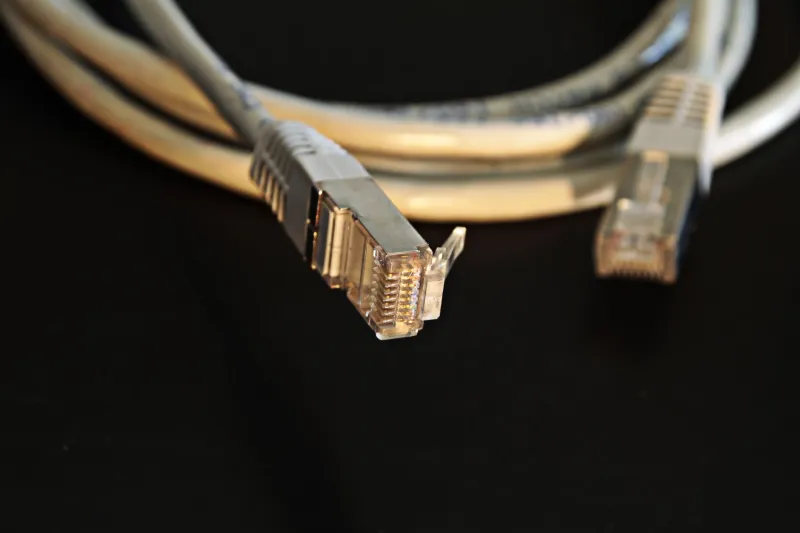
If you are lucky, there is already a two-core bell wire from the chime to the door. That is useful for a hardwired chime, but it is not network cable. For PoE, you want Cat6 — outdoor-rated or in conduit — with a drip loop at the entry point so water runs away from the connector rather than into it. Seal the penetration properly and use a grommet or gland. A neat bead of silicone around a cable is not a weatherproofing strategy on its own.
Practical routes vary by house. A terraced home may allow a cable up into the loft and down an internal wall. A semi with a garage may have a convenient cavity. A period property may mean surface trunking painted to match, or a discreet run behind skirting. Do not drill through a uPVC door frame unless you know what is inside it; drainage channels and reinforcement are easy to damage. In flats, communal walls and fire barriers are not yours to breach without permission.
PoE versus low-voltage chime wiring
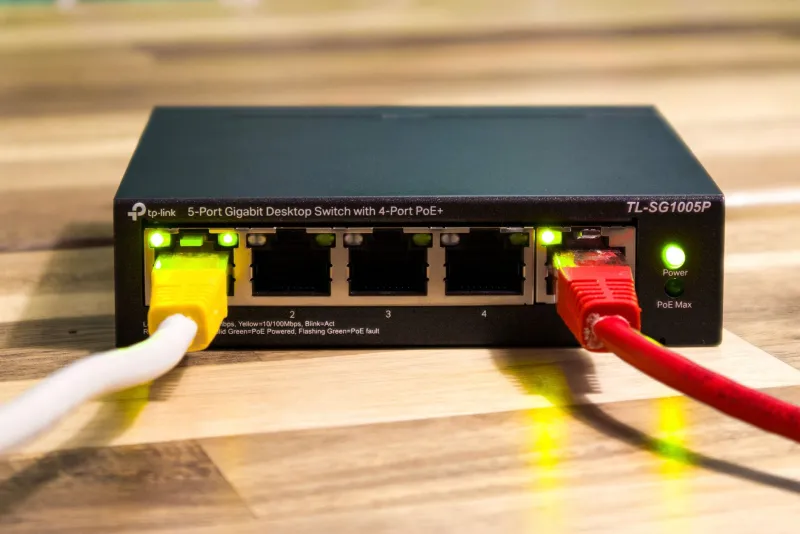
A PoE doorbell is the cleanest option if you can get Cat6 to the door. One cable carries power and data back to a PoE switch or injector, and the doorbell becomes just another device on the network. That means you can put it on a VLAN, give it a fixed IP address, and decide exactly what it can talk to. If you are wiring a small office, PoE also makes door release and intercom integration far less messy.
A low-voltage chime setup is the pragmatic choice where Cat6 cannot reach. It keeps the existing chime and uses the old bell wire, with a compatible transformer and, if needed, a relay. The trade-off is that the doorbell may still rely on Wi-Fi, so check signal at the door before you commit. Brick, foil-backed plasterboard and a metal door can all turn a promising Wi-Fi signal into a rumour.
Where the footage actually lives
Local recording is the quiet win. A doorbell with a microSD card is better than nothing, but cards fail and retention is limited. A network video recorder or a NAS with ONVIF support gives you proper retention and keeps footage off someone else’s cloud. If you do use cloud storage, read the small print: subscription tiers, retention periods and what happens when the service changes.
For small businesses, video entry brings data protection duties. UK GDPR still applies. Put up a sign, record only what you need, set a retention period and know how you would handle a subject access request. A doorbell pointed at a neighbour’s front path is also a neighbourhood relations problem, not just a technical one.
If you rent
Renting does not mean battery limbo. Ask the landlord before drilling, and propose a reversible install. If there is existing doorbell wiring, a compatible hardwired unit with a removable mount is often acceptable. If not, a plug-in chime and a Wi-Fi doorbell with local storage can work, provided the signal reaches the door. Adhesive mounts are tempting but can let go in cold, wet weather; use them as a temporary measure, not a permanent fix. A peephole camera or a door viewer is a low-risk alternative where fixing anything to the door is out of bounds.
A sensible checklist
- Check the existing transformer’s voltage and VA rating before buying a doorbell.
- Decide whether you need PoE or low-voltage chime wiring.
- Plan the cable route with weatherproofing and fire safety in mind.
- Choose local recording if you want to avoid subscriptions.
- Put the doorbell on a UPS-backed switch if you want it to survive short power cuts.
- For businesses, sort signage and retention before the first clip is recorded.
The front door is where the outside world meets your network. Treat it like a proper node, not a gadget that needs charging every few weeks, and it will quietly do its job for years.